

Cool roof paint is an innovative roofing solution designed to keep buildings cooler by reflecting more sunlight and absorbing less heat than traditional roof coatings. As energy efficiency and sustainable construction become increasingly important, cool roof paints have gained popularity in residential, commercial, and industrial buildings worldwide. These specialised coatings use reflective pigments and advanced technologies to reduce roof surface temperatures, helping create a more comfortable indoor environment while lowering cooling costs.
One interesting fact is that a conventional dark roof can reach temperatures of up to 65-80°C (149-176°F) on a hot summer day, whereas a cool roof coated with reflective paint can stay significantly cooler. Studies have shown that cool roof paints can reduce roof temperatures by up to 30°C (54°F), leading to lower energy consumption and reduced carbon emissions. In this blog, we will explore how cool roof paint works, the science behind its heat-reflective properties, and the benefits it offers for buildings and the environment.
The Science Behind Cool Roof Paint
To understand how cool roof paint works, it is important to look at the way heat interacts with a roof surface. When sunlight falls on a roof, three things happen: a portion of the sunlight is reflected away, some is absorbed as heat, and the rest is emitted back into the atmosphere. Traditional roofing materials absorb a large amount of solar energy, causing the roof surface to become extremely hot.
Cool roof paint is formulated with highly reflective pigments that increase the roof’s solar reflectance. Instead of absorbing sunlight, the coating reflects a significant portion of solar radiation away from the building. In addition, cool roof paints have high thermal emittance, meaning they can quickly release any absorbed heat back into the environment. This combination helps maintain lower roof temperatures throughout the day.
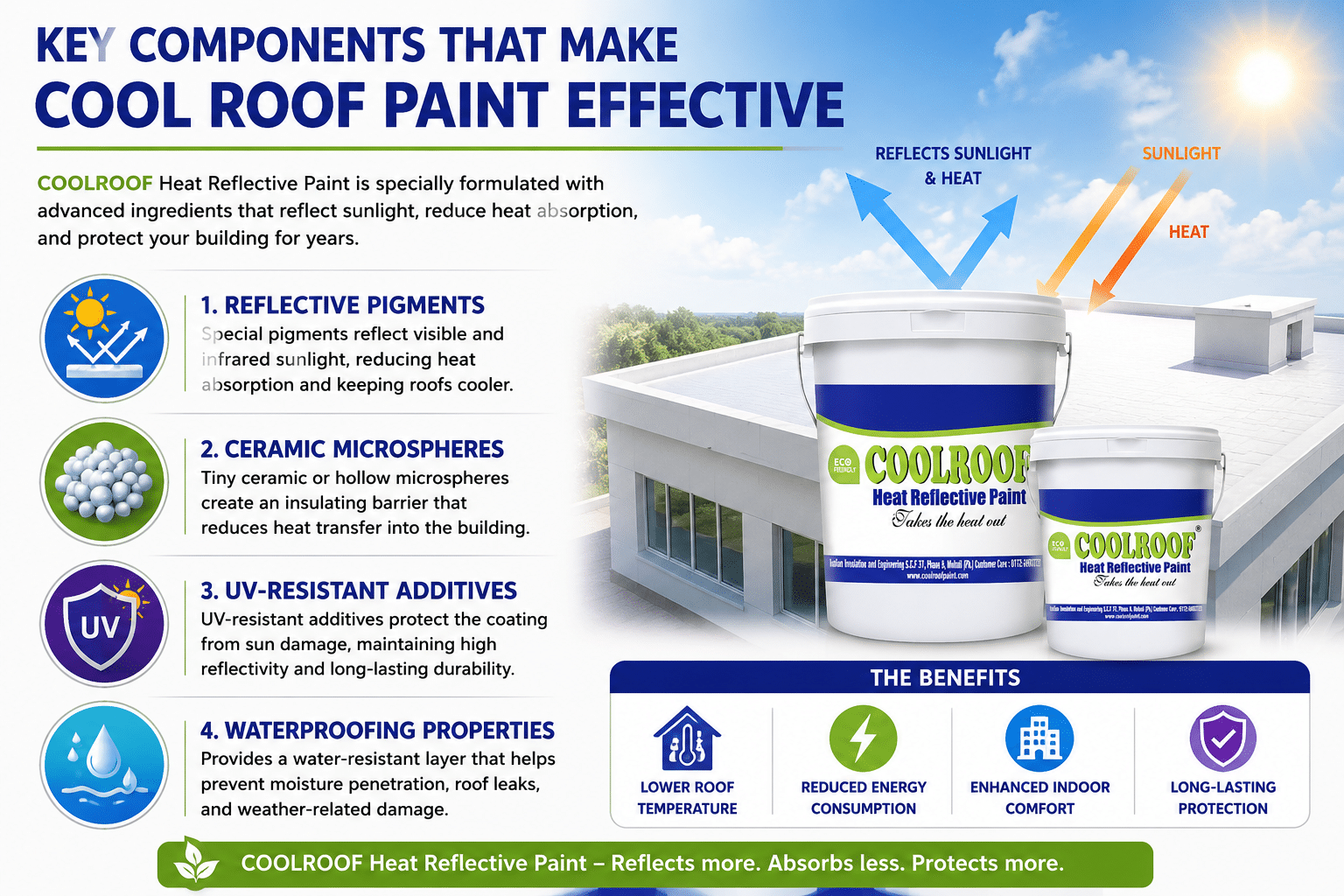
Key Components That Make Cool Roof Paint Effective
The performance of cool roof coatings depends on several advanced materials used during manufacturing. These include:
Reflective Pigments – Special pigments are designed to reflect both visible and infrared sunlight. Infrared rays are responsible for a large portion of heat gain in buildings. By reflecting these rays, the paint prevents excessive heat buildup.
Ceramic Microspheres – Many premium cool roof coatings contain ceramic or hollow microspheres. These tiny particles create an insulating barrier that further reduces heat transfer into the building.
UV-Resistant Additives – Continuous exposure to sunlight can degrade ordinary paint. Cool roof coatings include UV-resistant compounds that maintain reflectivity and durability for years.
Waterproofing Properties – Some cool roof paints also provide water-resistant protection, helping prevent moisture penetration, roof leaks, and weather-related damage.
How Effective Is Cool Roof Paint in Real Conditions?
One of the most common questions property owners ask is, how effective is cool roof paint in reducing indoor temperatures and energy costs.
The effectiveness depends on factors such as climate, roof type, building design, and coating quality. In hot and sunny regions, cool roof paints can significantly reduce heat gain through the roof. Buildings often experience cooler indoor temperatures, reducing the need for air conditioning during peak summer months.
In commercial facilities with large roof areas, the impact can be even more noticeable. Warehouses, factories, schools, and office buildings frequently use cool roof coatings to improve energy efficiency and create more comfortable indoor environments.
Research conducted across different climates has shown that cool roofs can reduce cooling energy demand while improving overall building performance. The greatest benefits are usually seen in areas that receive intense sunlight for most of the year.
Factors That Influence Cool Roof Paint Performance
Although cool roof paint offers numerous benefits, its effectiveness can vary based on several conditions.
Roof Color Before Application – Dark-colored roofs absorb more heat than lighter surfaces. Applying cool roof paint on darker roofs often results in a more dramatic temperature reduction.
Roof Material – Cool roof coatings can be applied to metal roofs, concrete roofs, asbestos sheets, and various other roofing materials. However, surface preparation and compatibility play an important role in achieving optimal performance.
Climate Conditions – Regions with high solar exposure generally see better results from cool roof technologies. Areas with long summers and high temperatures benefit the most from reflective roof coatings.
Maintenance Practices – Dust, dirt, and pollution can reduce a roof’s reflectivity over time. Periodic cleaning helps maintain the performance and longevity of the coating.
Environmental Benefits of Cool Roof Paint
Beyond energy savings, cool roof paint contributes to environmental sustainability. By lowering building temperatures naturally, it reduces dependence on air-conditioning systems, which consume large amounts of electricity.
Widespread adoption of cool roofs can also help mitigate the urban heat island effect. This phenomenon occurs when cities become significantly warmer than surrounding rural areas due to heat-absorbing surfaces such as roads, pavements, and rooftops.
By reflecting solar radiation instead of absorbing it, cool roof coatings help lower ambient temperatures in urban environments. This contributes to improved air quality, reduced greenhouse gas emissions, and more sustainable cities.
Also Read: Cool Roof Paint vs Cool Roof Tiles: Which One is Better
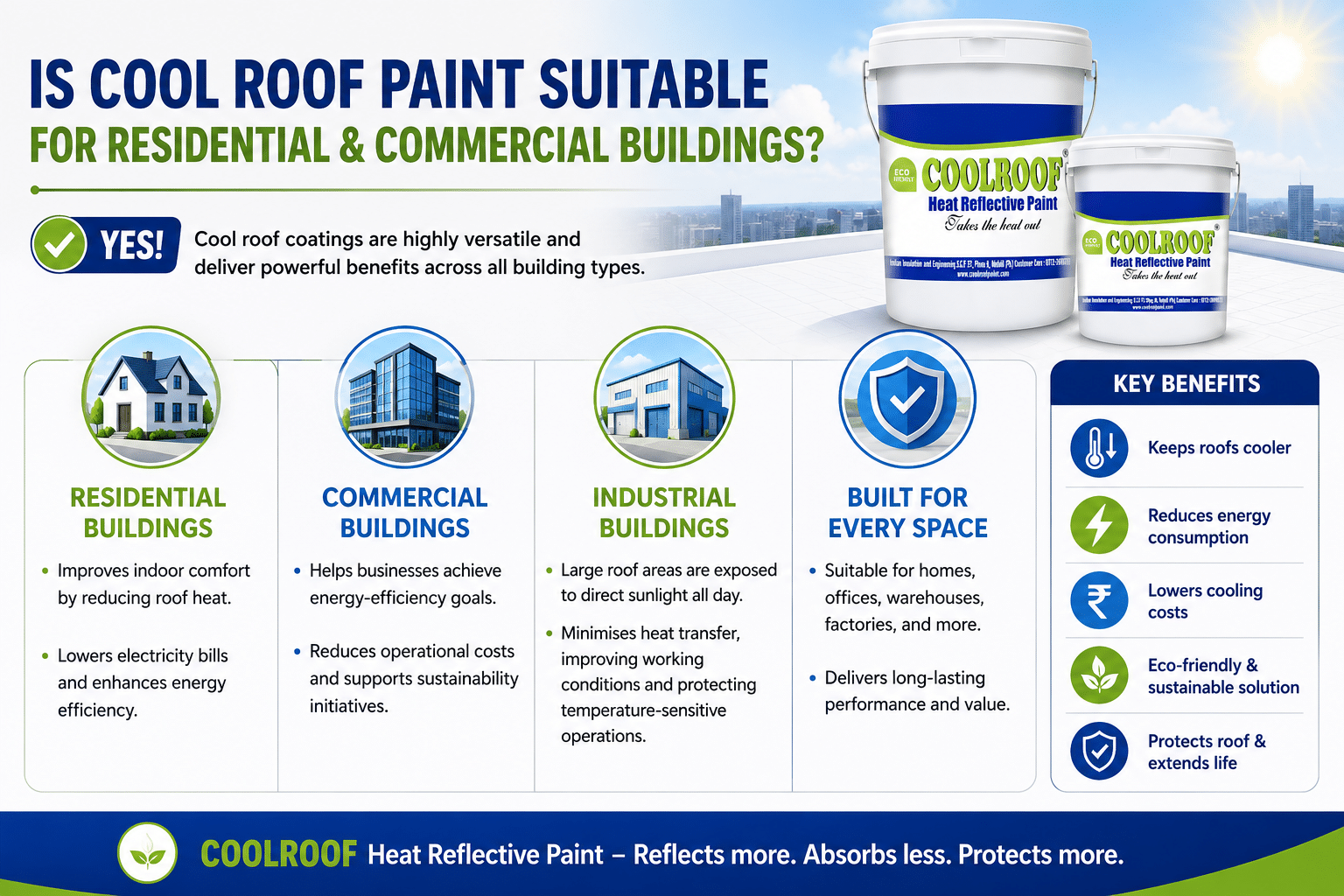
Is Cool Roof Paint Suitable for Residential and Commercial Buildings?
Yes, cool roof coatings are highly versatile and can be used across various property types. Homeowners use them to improve indoor comfort and reduce cooling expenses, while businesses often apply them to achieve energy-efficiency goals and lower operational costs. Industrial buildings particularly benefit from cool roof systems because large roof surfaces are exposed to direct sunlight throughout the day. By minimising heat transfer, these coatings create more comfortable working environments and support temperature-sensitive operations.
Long-Term Value of Cool Roof Paint
When evaluating how effective cool roof paint is, it is important to consider long-term benefits rather than just immediate temperature reductions. A quality cool roof coating can extend roof life by protecting the surface from UV damage, thermal expansion, and weather-related wear. Reduced roof stress often means fewer repairs and lower maintenance costs over time.
Additionally, as energy prices continue to rise, investments in energy-efficient roofing solutions become increasingly valuable. Cool roof paint offers a practical and cost-effective approach to improving building performance without requiring major structural modifications.
Frequently Asked Questions (FAQs)
How does cool roof paint work differently from regular roof paint?
Cool roof paint contains specialised reflective pigments and heat-emitting properties that reflect solar radiation and reduce heat absorption, unlike standard paints that primarily provide color and protection.
How effective is cool roof paint in reducing indoor temperatures?
The effectiveness varies depending on climate, roof type, and coating quality, but it can significantly reduce heat transfer and improve indoor comfort during hot weather.
Can cool roof paint be applied to existing roofs?
Yes, cool roof coatings can usually be applied to existing metal, concrete, and other roofing surfaces after proper cleaning and preparation.
How long does cool roof paint last?
Most high-quality cool roof coatings can last several years when applied correctly and maintained according to manufacturer recommendations.
Does cool roof paint require regular maintenance?
Basic maintenance, such as periodic cleaning and inspections, helps preserve reflectivity and ensures the coating continues to perform effectively over time.