

Reflective Metal Roofs, Cool Clay / Terracotta Tiles, Reflective Roof Coatings, Single-Ply Membranes, Green Roofs, Concrete Tiles, EPDM Roofing Membranes, and Photovoltaic Shingles are among the different types of cool roofing materials used to improve building energy efficiency and reduce heat absorption. As temperatures rise and cooling costs increase, choosing the right roofing material has become an important consideration for residential, commercial, and industrial buildings.
Traditional roofs often absorb substantial amounts of solar radiation, transferring heat into indoor spaces and increasing dependence on air conditioning. Cool roofing materials help address this challenge by reflecting sunlight, releasing absorbed heat, providing thermal insulation, or creating natural cooling effects. Depending on the material, these solutions can help maintain comfortable indoor temperatures, reduce energy consumption, and support sustainable construction practices.
However, each roofing option offers distinct advantages in terms of solar reflectance, thermal emittance, durability, maintenance requirements, installation costs, and environmental impact. Selecting the most suitable material depends on factors such as local climate, roof design, building requirements, and long-term performance expectations. In this blog, we will explore the major types of cool roofing materials, their key features, benefits, and practical applications to help you make an informed roofing decision.
8 Types of Cool Roofing Materials for Energy-Efficient Buildings
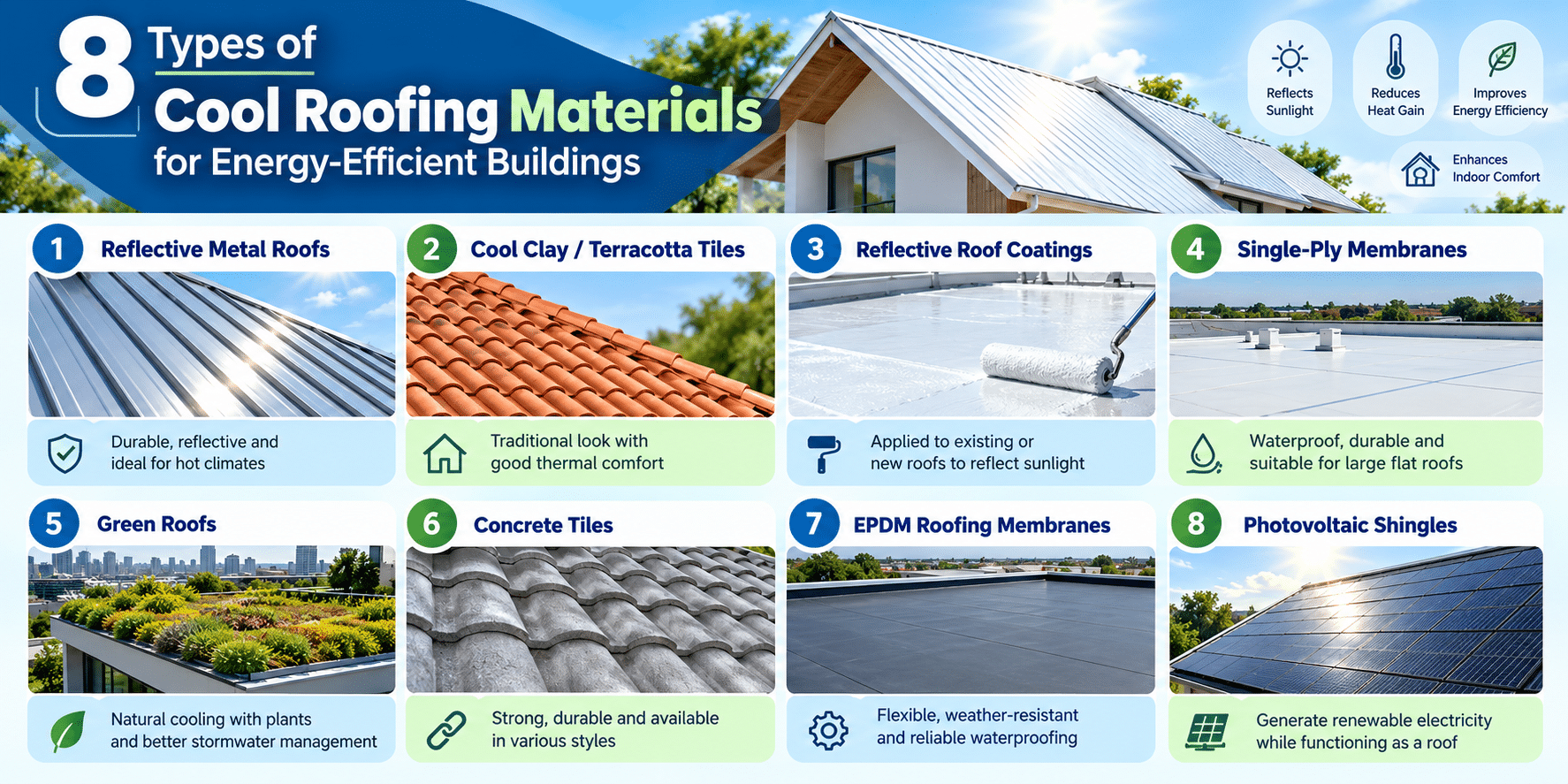
Cool roofing materials help reduce heat absorption and improve the thermal performance of buildings. They are available in different forms, from reflective metal sheets to green roofs and solar-integrated shingles. Understanding their features, advantages, and applications makes it easier to choose the right roofing solution for your property.
1. Reflective Metal Roofs
Reflective metal roofs are a popular choice for buildings that need durable and energy-efficient roofing. They are usually made from steel or aluminium and feature reflective finishes that help reduce the amount of solar heat absorbed by the roof. These roofs are lightweight, strong, and resistant to many weather conditions. Their smooth surfaces and special coatings can reflect a significant amount of sunlight, helping reduce roof temperatures during hot weather.
Key benefits of reflective metal roofs:
- Reflect sunlight and help reduce heat gain.
- Offer long service life with proper maintenance.
- Require relatively little maintenance.
- Are suitable for residential, commercial, and industrial buildings.
Reflective metal roofing is particularly useful in regions with hot summers. However, proper insulation and ventilation are important for achieving better indoor comfort.
2. Cool Clay / Terracotta Tiles
Cool clay and terracotta tiles are suitable for buildings where traditional appearance and thermal comfort are important. These tiles are made from natural clay and are commonly used in residential properties and architectural projects. Their performance depends on factors such as colour, surface finish, thickness, and installation. Light-coloured or specially designed reflective tiles can reflect more sunlight than conventional dark tiles. The space beneath the tiles can also support airflow, helping reduce heat transfer into the building.
Key benefits of cool clay and terracotta tiles:
- Provide an attractive, traditional appearance.
- Offer good durability when properly installed.
- Can help manage roof heat, depending on their design.
- Are available in different shapes, colours, and finishes.
Although clay tiles can be heavier and more expensive to install than some alternatives, they are a useful option for homes and buildings designed for long-term performance.
3. Reflective Roof Coatings
Reflective roof coatings are specially formulated products applied to existing or new roof surfaces to improve their ability to reflect sunlight. They are often used on concrete roofs, metal roofs, and certain other compatible roofing systems. These coatings are available in different formulations, including acrylic, silicone, and other specialised products. Many are designed in light colours, particularly white, to reflect more solar radiation. Some coatings also provide protection against moisture and weathering.
Key benefits of reflective roof coatings:
- Help reduce surface temperatures and heat absorption.
- Can be applied to suitable existing roofs.
- May reduce cooling energy requirements.
- Help protect compatible roof surfaces from weather exposure.
When choosing a cool roof coating, consider its solar reflectance, thermal emittance, weather resistance, and compatibility with the existing roof. Proper surface preparation and application are essential for good results.
4. Single-Ply Membranes
Single-ply membranes are flexible roofing sheets commonly used on commercial buildings, warehouses, offices, and other structures with flat or low-slope roofs. They are installed as a single waterproofing layer and are available in different materials.
Common types include TPO (thermoplastic polyolefin), PVC (polyvinyl chloride), and EPDM (ethylene propylene diene monomer). Light-coloured TPO and PVC membranes can provide reflective roofing performance, making them useful for cool roof applications.
Key benefits of single-ply roofing membranes:
- Provide waterproof protection.
- Are suitable for large, flat roof areas.
- Can offer good durability when correctly installed.
- Reflect sunlight when designed with suitable reflective surfaces.
The performance of a single-ply membrane depends on its material, colour, thickness, installation quality, and maintenance. Selecting the right membrane can help improve energy efficiency while protecting the building from water leakage.
Also Read: Cool Roof vs Conventional Roof
5. Green Roofs
Green roofs are roofing systems that support vegetation on top of a building. They generally include a waterproofing layer, drainage components, a growing medium, and selected plants. Depending on their design, they may be extensive systems with low-maintenance vegetation or intensive systems with deeper soil and larger plants. Unlike conventional reflective roofs, green roofs cool buildings mainly through shade, insulation, and evapotranspiration, which is the process by which plants release water vapour.
Key benefits of green roofs:
- Help reduce heat transfer into buildings.
- Can improve stormwater management.
- Support urban biodiversity.
- May reduce the urban heat island effect.
Green roofs require careful planning, as the structure must support their weight. Drainage, waterproofing, plant selection, and maintenance are also important considerations. They are especially useful for projects focused on sustainable building design.
6. Concrete Tiles
Concrete roof tiles are manufactured using cement, sand, water, and other suitable materials. They are known for their strength and ability to withstand different weather conditions when properly installed. Concrete tiles can be produced in various colours, shapes, and finishes. Light-coloured tiles or tiles with specialised reflective coatings can help reduce solar heat absorption compared with darker, less reflective alternatives.
Key benefits of concrete roofing tiles:
- Offer good strength and durability.
- Are available in different architectural styles.
- Provide thermal mass that can help moderate temperature changes.
- Can be designed with reflective finishes for improved roof performance.
Concrete tiles are generally heavier than metal roofing, so the roof structure must be suitable for their weight. They can be a practical option for residential and commercial buildings where durability and appearance are important.
7. EPDM Roofing Membranes
EPDM roofing membranes are synthetic rubber roofing materials widely used on flat and low-slope roofs. They are valued for their flexibility, weather resistance, and ability to accommodate certain building movements. Traditional EPDM membranes are usually black, which means they absorb more sunlight than white reflective roofing materials. However, white EPDM products and compatible reflective coatings are also available for applications where reducing heat absorption is a priority.
Key benefits of EPDM roofing membranes:
- Provide reliable waterproofing when properly installed.
- Resist many weather-related stresses.
- Offer flexibility across changing temperatures.
- Can provide reflective performance when a suitable light-coloured system is selected.
When considering EPDM for a cool roof, it is important to evaluate the actual surface colour and reflective properties rather than assuming all EPDM membranes provide the same cooling benefits.
8. Photovoltaic Shingles
Photovoltaic shingles combine roofing functionality with solar electricity generation. These specialised shingles are installed as part of the roof and use solar cells to convert sunlight into electrical energy.
Unlike conventional cool roofing materials, photovoltaic shingles primarily help buildings by generating renewable electricity rather than simply reflecting sunlight. Their overall energy benefits depend on the system design, sunlight exposure, roof orientation, and installation quality.
Key benefits of photovoltaic shingles:
- Generate renewable electricity from sunlight.
- Integrate solar technology into the roof design.
- Can reduce dependence on grid electricity.
- Offer an alternative to conventional rooftop solar panels.
Photovoltaic shingles generally involve a higher initial investment and require suitable electrical installation. They are worth considering for new buildings or roof replacement projects where renewable energy generation is a priority.
Also Read: U-value For Roofs: The Glazing Industry Already Uses It – Why Don’t Indian Contractors?
How to Choose the Right Cool Roofing Material
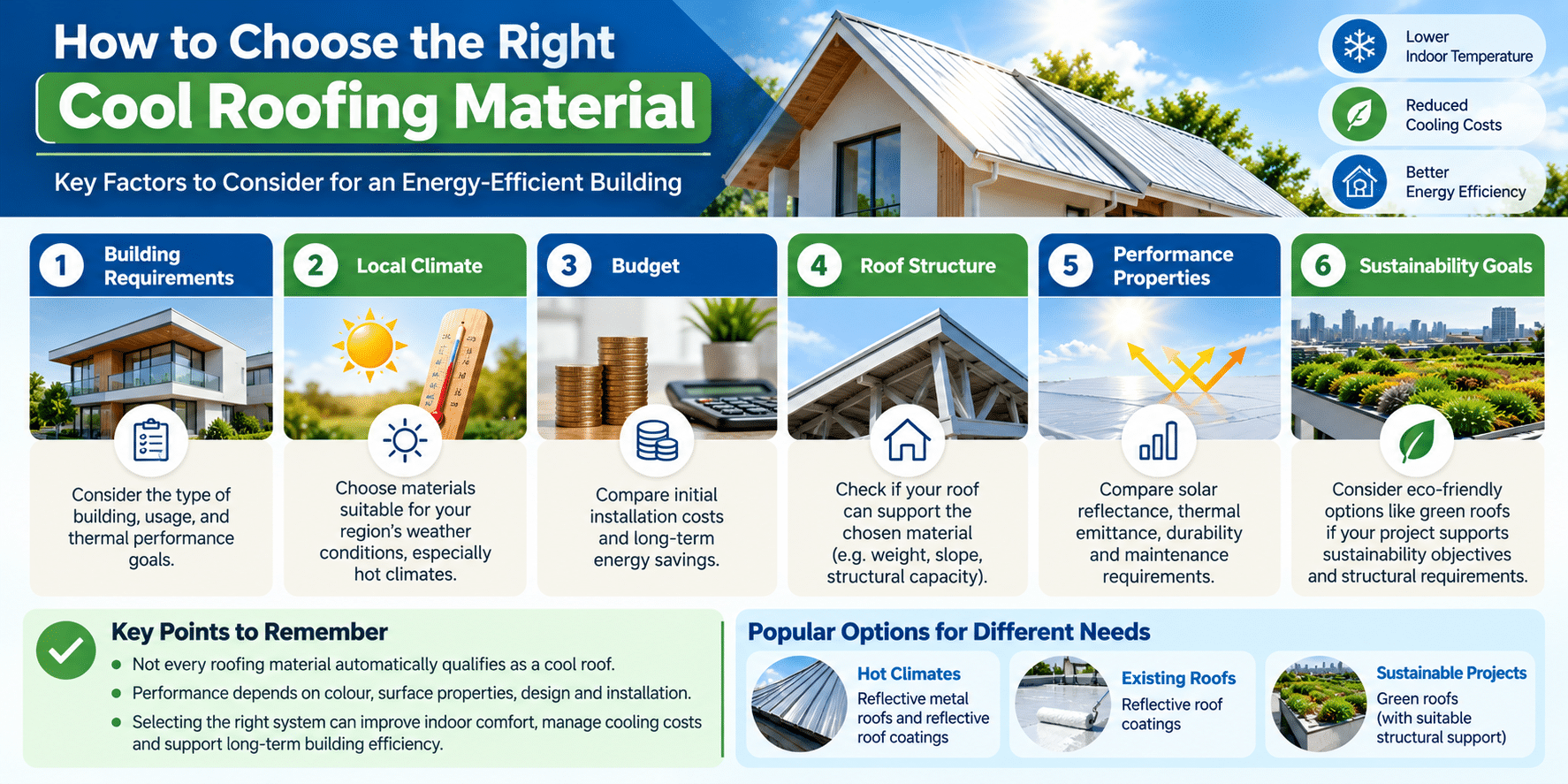
Choosing the best cool roofing material depends on your building’s requirements, local climate, budget, and roof structure. Compare solar reflectance, thermal emittance, durability, maintenance needs, and installation costs before making a decision. For hot climates, reflective metal roofs and reflective roof coatings can be useful options, while green roofs may suit projects with suitable structural support and sustainability goals.
Remember that not every roofing material automatically qualifies as a cool roof. Its actual performance depends on its colour, surface properties, design, and installation. Selecting the right system can help improve indoor comfort, manage cooling costs, and support long-term building efficiency.
Final Words
Choosing the right cool roofing material is an important step towards creating an energy-efficient, comfortable, and sustainable building. From reflective metal roofs and cool clay tiles to reflective roof coatings, single-ply membranes, green roofs, concrete tiles, EPDM roofing membranes, and photovoltaic shingles, each option offers unique benefits for different building requirements.
Before selecting a roofing solution, consider your local climate, roof structure, installation budget, maintenance needs, and long-term energy goals. Pay attention to solar reflectance and thermal emittance, as these properties help determine how effectively a roof reflects sunlight and releases absorbed heat. It is also important to choose quality materials and ensure proper installation for reliable performance.
Investing in suitable cool roofing materials can help reduce heat gain, improve indoor comfort, and potentially lower air conditioning costs. Whether you are constructing a new building or upgrading an existing roof, the right roofing system can contribute to better energy performance and long-term value. By understanding the available options and comparing their features, you can make an informed decision that meets your building’s needs while supporting more sustainable construction practices.