

In today’s construction world, saving energy is no longer just an option or a trend, it has become something that every project needs to focus on. Most people in the industry already know about U-value when it comes to glass. Architects, builders, and even clients understand that the type of glass used in a building can affect how comfortable it feels inside and how much electricity is used. But when it comes to roofs, this same level of understanding is still missing.
This is quite surprising, especially in a country like India, where roofs are exposed to strong sunlight for most of the year and play a big role in how much heat enters a building. Even though high-performance glass is widely talked about and used, roofing is still often seen as just a basic part of construction, instead of something that can improve temperature control and energy efficiency.
In this blog, we will look at why U-value should be given the same importance in roofing and how small changes in the way we think about roofs can help create buildings that are more comfortable, energy-efficient, and better suited for the future.
What Is U-Value
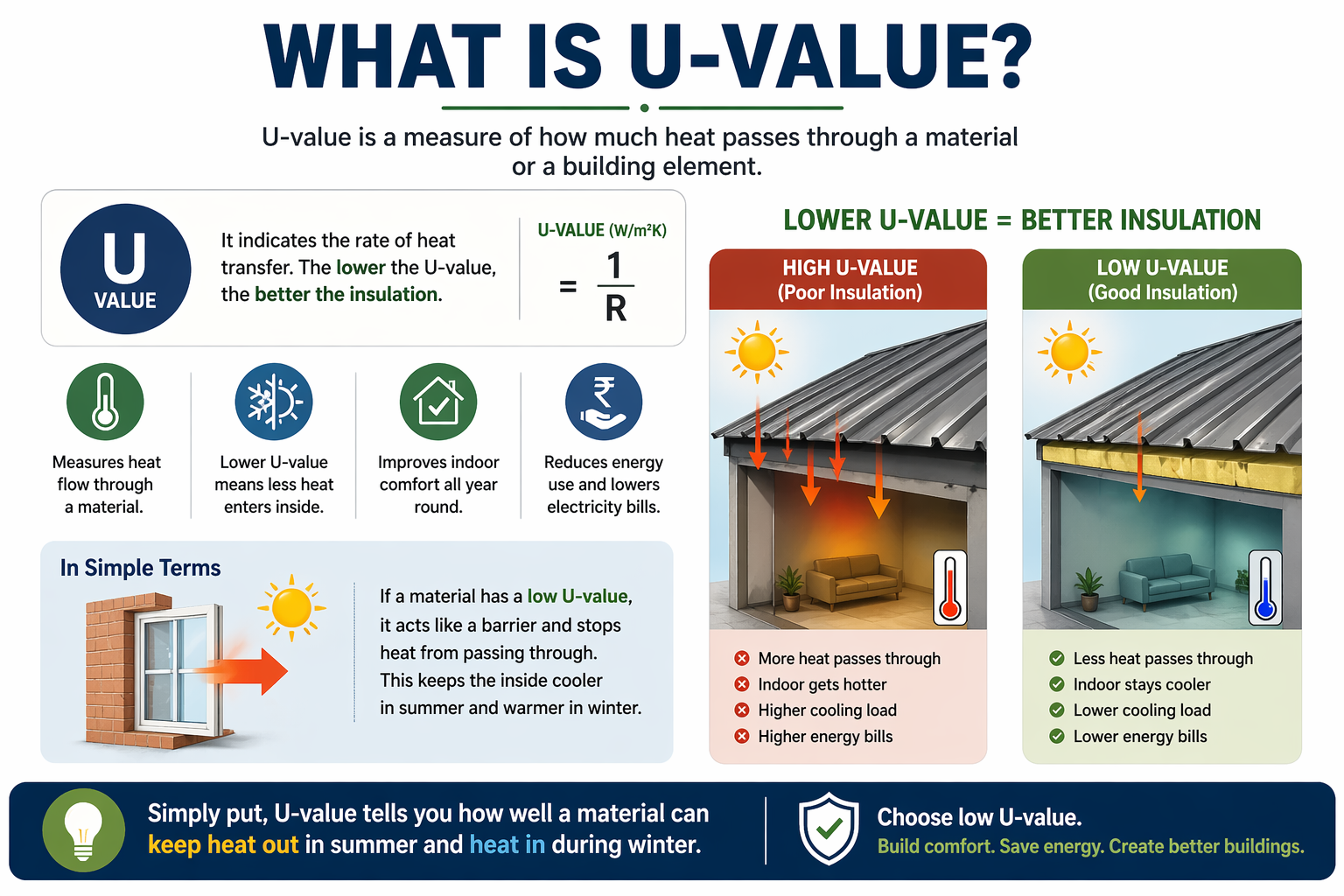
U-value is nothing complicated. It simply measures how much heat passes through a material. The lower the U-value, the better the insulation. In practical terms, this means a roof with a low U-value will keep indoor spaces cooler in summer and reduce the load on air conditioning systems. Despite this, most roofing decisions in India are still made without even considering thermal performance.
The Roof Is the Real Heat Entry Point
In a country like India, where summers are long and the heat can be quite harsh, the roof is exposed to direct sunlight for most of the day. Because of this constant exposure, it becomes one of the main sources of heat entering a building. That’s why overlooking U-value at the roof level often leads to problems in the long run. Even if the walls and glass are well designed, a roof without proper insulation can make indoor spaces feel warmer than they should. This usually results in higher electricity bills and a constant need to rely on cooling systems just to maintain a comfortable environment.
Why Contractors Still Don’t Focus on U-Value
The lack of focus on U-value in roofing is not due to unwillingness. Instead, it reflects how the construction industry has traditionally approached roofing. For many contractors, the roof is still seen as a basic structural component rather than a contributor to building performance.
Several factors contribute to this mindset:
- Limited awareness about how U-value impacts energy efficiency and comfort
- A strong emphasis on minimising initial construction costs
- Clients rarely ask for insulation data or thermal performance metrics
- Roofing is often excluded from energy efficiency discussions during planning
As a result, insulation is frequently considered optional. If it is included, it is often done without proper evaluation of its effectiveness.
What Changes When You Start Considering U-Value

The moment you start paying attention to U-value, your entire approach to roofing begins to shift. It’s no longer just about picking the cheapest or most easily available material. Instead, you start thinking about how the roof will actually perform over time and how it will affect the building in the long run.
A well-insulated roof doesn’t just sit there; it actively improves the way a space feels and functions. You’ll notice that indoor temperatures stay more consistent throughout the day, without extreme heat building up. Cooling systems don’t have to work as hard, which naturally reduces their load and improves their efficiency. Over time, this also reflects in lower electricity bills. Most importantly, the overall comfort of the people inside the building improves. The space feels more livable, more balanced, and far less dependent on constant cooling.
Materials That Help Reduce Roof U-Value
One of the biggest misconceptions is that improving roof insulation is difficult or expensive. In reality, several effective materials are already available in the Indian market. The issue is not accessibility, but awareness and consistent use.
Some commonly used materials include:
- PUF (Polyurethane Foam) panels, which offer excellent insulation and are widely used in industrial and commercial buildings
- XPS (Extruded Polystyrene) and EPS (Expanded Polystyrene) boards are known for being lightweight and cost-effective
- Mineral wool, which provides both thermal and acoustic insulation
- Rubber-based insulation solutions are valued for their durability, flexibility, and long-term performance
The key lies in selecting the right material based on the building type, climate conditions, and required insulation level. Even small improvements in thickness or material choice can significantly lower the roof’s U-value.
Final Words
U-value is not a new or unfamiliar concept. It is already widely used in glazing to improve building performance and energy efficiency. The gap lies in its limited application in roofing, despite the roof being one of the largest contributors to heat gain in Indian conditions.
Ignoring the thermal performance of roofs leads to higher energy consumption, increased operational costs, and reduced indoor comfort. On the other hand, even modest improvements in insulation can deliver noticeable and lasting benefits.
As the industry continues to move toward performance-driven construction, contractors who start considering U-value today will be better positioned for the future. They will not only deliver more efficient and comfortable buildings but also stand out in a market that is steadily shifting toward smarter, more sustainable solutions.